
College student success can be attributed to many factors, and the research on this topic has undergone significant evolution over the past 50 years. Before Tinto’s (1975, 1993) seminal work focusing on student attrition, student success was perceived as having a positive impact primarily on academic influences and outcomes. However, Tinto’s groundbreaking contribution expanded the way higher education leaders conceptualized student success by looking beyond academic performance and recognizing the importance of interpersonal interactions that lead to social integration. Scholars then began to explore more holistic measures of student success that included a wide range of psychosocial variables. The current study analyzes several different elements that are important to the success of on-campus students: interpersonal interactions, challenge and support, flourishing, and sense of belonging. These variables are important not only for their own sake as desired student outcomes, but also for the ways they can contribute to students’ academic performance.
In their critique of Tinto’s theory, Hurtado and Carter (1997) suggested “the need to assess specific forms of students’ interaction in college, and perhaps researchers’ conceptualizations of integration, by using a conceptually distinct measure that captures the individual’s view of whether he or she feels included in the college community” (p. 327). To this end, scholars have developed a new variable—deeper life interactions—to distinctly measure deeper aspects of relationships and their influence on student outcomes. Sriram and McLevain (2016) introduced this concept, defining deeper life interactions as “those that occur around life’s big questions and meaning-making” (p. 605), and developed a scale to measure students’ social, academic, and deeper life interactions with peers, faculty, and staff. These deeper interactions encompass conversations around meaning, values, and purpose, and subsequent research has validated them as a distinct variable that can be reliably measured and affects other student outcomes, such as their sense of belonging (Erck & Sriram, 2022a, 2023; McLevain Overton & Sriram, 2024; Sriram, Weintraub, et al., 2020). One area that remains unexplored is how these interactions can influence a student’s perception of challenge and support.
For decades, a key consideration for fostering student success has been ensuring an appropriate balance between constructive challenge and unwavering support (Sanford, 1966), and this theory has been influential in how student affairs professionals think about student learning in college residence halls (Blimling, 2015). This balance between challenge and support helps to cultivate a nurturing environment where students are encouraged to step out of their comfort zone and confront challenges while also feeling confident in an unwavering source of support. This combination leads to both personal and academic growth because constructive challenges can stimulate critical thinking, problem-solving skills, and resilience (Sanford, 1966; Ward et al., 2005). A high level of support provides students with the reassurance and resources they need to navigate the difficulties of college, pushing them into the developmental dissonance needed to maximize growth (Sanford, 1966).
Students’ interactions with peers, faculty, and staff can be impacted by differing levels of challenge and support, which can then impact their sense of flourishing and belonging. Flourishing can be defined as the perception of one’s own personal success in terms of categories such as relationships, purpose, and mindset (Diener et al., 2010), and it can be impacted by environmental factors, personal growth, and positive emotions (Howell & Buro, 2015).
Another crucial element contributing to overall student success is sense of belonging, which encompasses the feeling of community, connectedness, and support within the academic environment (McMillan & Chavis, 1986). Students who feel a strong sense of belonging are more likely to engage actively in their academic pursuits, seek assistance when needed, and develop meaningful relationships with peers and faculty (Sriram, Weintraub, et al., 2020; Strayhorn, 2012; Yeager et al., 2016). Furthermore, a robust sense of belonging fosters engagement among students and enhances their overall well-being (Gopalan & Brady, 2019), which can contribute to their overall success (Strayhorn, 2012). For these reasons, a sense of belonging is a common goal of residence life programs (Blimling, 2015), since nurturing a positive and inclusive community is essential for creating an environment where students can flourish holistically.
This study examines the relationships of student interactions, challenge and support, flourishing, sense of belonging, and grade point average (GPA) for students who live on campus. Interactions with peers, faculty, and staff span a spectrum of academic, social, and deeper life interactions, each contributing uniquely to the student experience (Sriram, Haynes, et al., 2020) and positively impacting students’ sense of belonging in college (Sriram, Weintraub, et al., 2020). The present study goes beyond examining the simple correlation between interactions and sense of belonging in order to dive deeper into the intricate relationship between student interactions and their perception of challenges and support. Unraveling this relationship can illuminate how student interactions contribute to cultivating an on-campus living environment rich in both challenge and support.
HISTORICAL CONCEPTIONS OF THE FOUR ESSENTIAL ELEMENTS OF STUDENT SUCCESS
The Importance of Student Interactions for Success
Student interactions are significant predictors of sense of belonging and retention (Otero et al., 2007; Sriram, Weintraub, et al., 2020; Wolniak et al., 2012), and their interactions with faculty are especially important (Cotten & Wilson, 2006). In fact, social interactions are often the starting point for engaging in academic interactions, which also have a positive impact on students’ academic skills, confidence, and self-worth and thus contribute to retention (Otero et al., 2007; Wolniak et al., 2012).
Sriram, Haynes, and colleagues (2020) recognized that the dichotomous categories of social and academic integration proposed by Tinto (1975) left a gap for the potential existence of other types of interactions “that occur around meaning, value, and purpose” (p. 596), so they created and validated a scale to measure these interactions, which they refer to as deeper life interactions. Sriram, Weintraub, and colleagues (2020) studied the effects of academic, social, and deeper life interactions on students’ sense of belonging and found that all three were important contributors to sense of belonging for students living on campus.
The Need to Measure Challenge and Support for Student Success
Sanford’s (1966) challenge and support theory is a pivotal framework in this study, shedding light on the interplay between academic challenges and supportive environments in facilitating student development and success. Sanford suggested that optimal growth in college occurs when individuals encounter a balanced blend of challenges that push them beyond their comfort zones and support systems that provide guidance and encouragement. An imbalance, such as an overload of challenges without adequate support, can lead to feelings of being overwhelmed and academically disengaged (Sanford, 1966). Likewise, excessive support without the balancing effect of challenge can stifle personal growth and resilience. Despite the paradigmatic nature of this theory, the advantages of challenge and support have received limited attention, with few researchers delving into causes and effects.
Both Longerbeam (2016) and Sanford (1966) underscore the predictive power of challenge and support dynamics in shaping student development and academic success. Longerbeam conducted a relatively rare study on challenge and support in college students, employing a mixed methodology to explore its relevance for student success, illuminating the importance of academic challenges within a nurturing campus environment, and clarifying how these can impact graduation rates and academic achievement. Students must be able to embrace academic struggles and seek support through interpersonal connections, a proactive engagement that serves as a catalyst for encouraging students’ willingness to seek assistance and become more engaged.
Drawing upon Sanford’s (1966) theory, Ward and colleagues (2005) underscored the importance of cultivating campus environments that strike a delicate balance between challenge and support, creating environments conducive to holistic student development and flourishing. Campus environments should not only challenge students intellectually but should also provide robust support systems to nurture their personal and academic growth.
Helping Students Flourish
Though many studies of flourishing in college students focus on academic success, others have sought to broaden this scope. Keyes and Haidt (2003) conceptualized flourishing as having three components: emotional, psychological, and social well-being. Emotional well-being encompasses positive emotions and thoughts, while psychological and social well-being emphasize life purpose and interpersonal relationships, respectively. Students who actively engage in campus and residential activities tend to experience higher levels of flourishing (Ambler, 2006), which is significantly influenced by sense of belonging, faculty interactions, and campus involvement (Schreiner et al., 2013).
Diener and colleagues (2010) introduced an 8-item scale assessing individuals’ perceived levels of flourishing. This scale incorporates key elements associated with flourishing, such as a sense of purpose and meaning in life, support from relationships, contribution to others’ happiness, competence in activities, and respect from peers. Notably, both Diener and colleagues and Keyes and Haidt (2003) emphasized the importance of interpersonal relationships and a sense of purpose and meaning in life as a part of flourishing.
The Vital Role of Sense of Belonging in College Student Success
Extant research in higher education sometimes uses the terms sense of belonging and sense of community interchangeably; in the present study, we treat both concepts as overlapping constructs. Whichever term is used, the essential concept is captured by McMillan and Chavis (1986) as the “feeling that members have of belonging, a feeling that members matter to one another and to the group, and a shared faith that members’ needs will be met through their commitment to be together” (p. 9). Sense of belonging is a key goal of residence life programs (Blimling, 2015) and may have the largest influence on student success and well-being (Schreiner, 2010). It is both influenced by certain variables such as student interactions and has an impact on other variables such as student success, well-being, and academic achievement (Schreiner et al., 2012; Sriram, Weintraub, et al., 2020).
The National Academies of Sciences, Engineering, and Medicine (NAS) defines sense of belonging as “a student’s sense that he or she belongs at a college, fits in well, and is socially integrated” (2017, p. 6) and recognizes that, across six of their seven studies, it has a significant influence on GPAs, with effect sizes ranging from standard deviations of .25 to 1.10. Identifying sense of belonging as a key influencer of academic success, involvement, and overall well-being coincides with the results of other research (Gopalan & Brady, 2019); for example, Strayhorn (2012) found that students with a strong sense of belonging exhibited higher levels of engagement and utilized campus resources more effectively, leading to increased success.
PURPOSE AND CONCEPTUAL FRAMEWORK
Although Sanford’s (1966) challenge and support theory remains fundamental to higher education and specifically to residence life, two issues continue to raise questions. The first is determining how to assess students’ perception of their challenges and supports throughout their college experience. Second, while an optimal balance of challenge and support may facilitate student development, the broader positive outcomes of this balance are yet to be fully examined. The present study seeks to address these inquiries by developing valid and reliable scales for assessing perceptions of challenge and support and testing a model of college student success specifically for students living on campus.
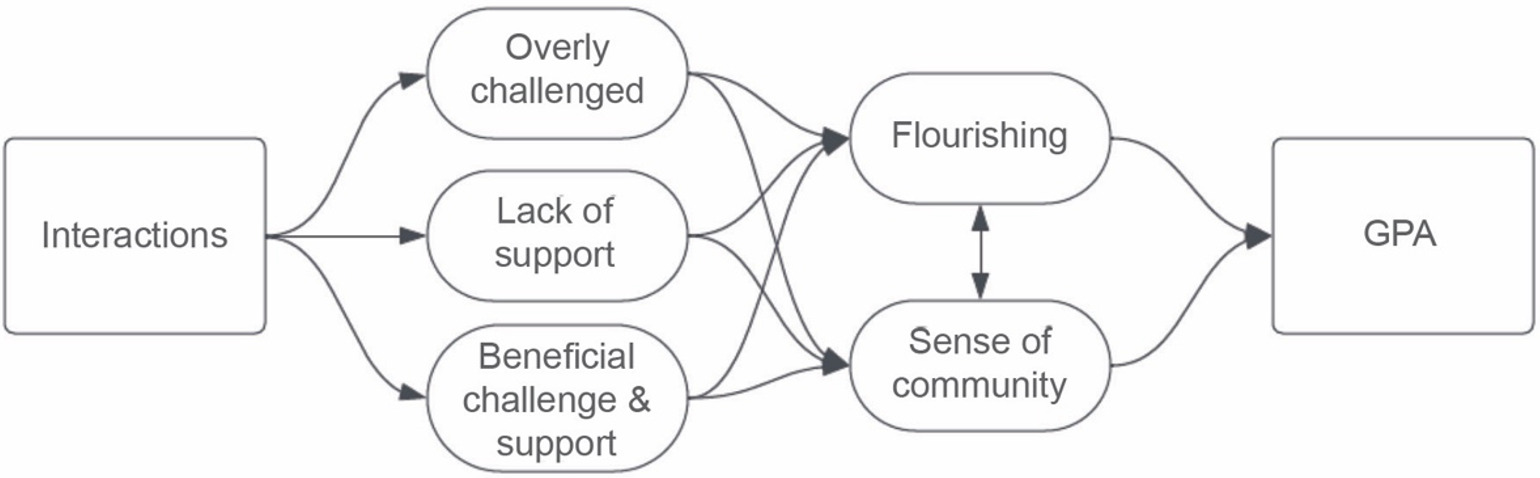
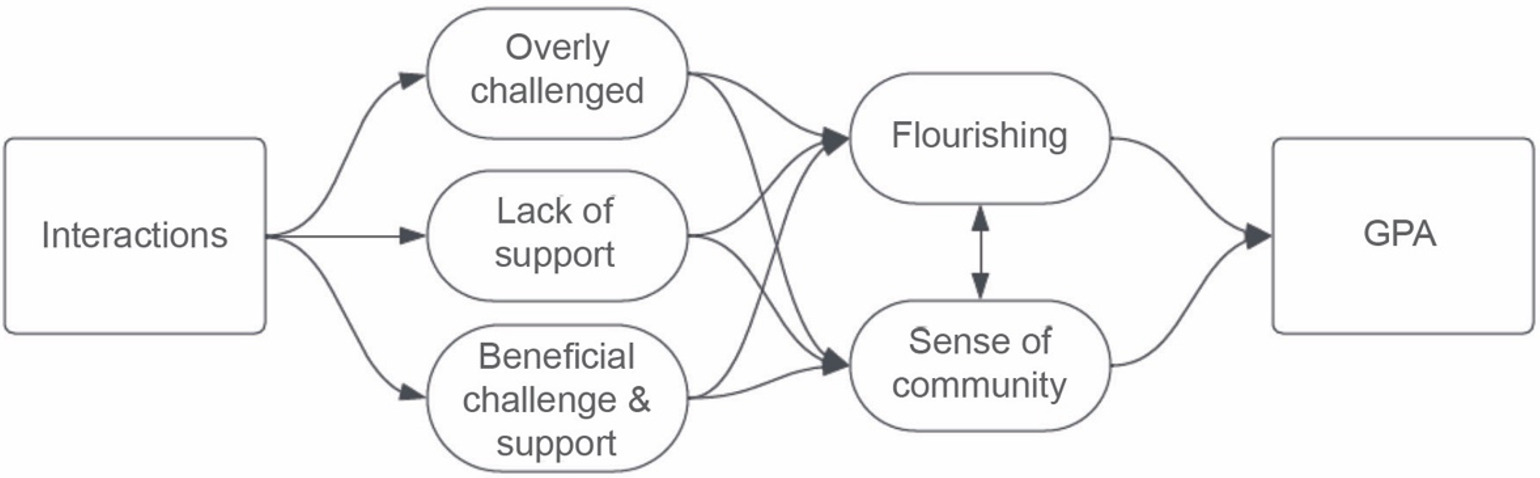
This study also explores the influence of student interactions on their perceptions of challenge and support and how these dynamics shape the three critical components of student success—flourishing (intrapersonal), sense of belonging (interpersonal), and GPA (academic performance)—forming what we refer to as the student success trident. The conceptual framework shown in Figure 1 delineates the hypothesized relationships. In order to better understand these relationships, we addressed the following research question: To what extent can a model explain how student interactions, challenge and support, sense of belonging, student flourishing, and GPA relate to one another for students living on campus?
METHODS
We employed a quantitative, nonexperimental research design grounded in a postpositivist epistemology, which aims to attain knowledge using objective tools (Sriram, 2017). This epistemology emphasizes that knowledge formation is influenced by data and evidence, causal relationships determine outcomes, and objectivity is integral to the inquiry process (Phillips & Burbules, 2000).
We conducted a Confirmatory Factor Analysis (CFA) to ensure construct validity. To evaluate how our main variables interact, we used Structural Equation Modeling (SEM) to statistically test our conceptual framework. Specifically, we analyzed the influence of student interactions (eight scales), challenge and support (three scales), sense of belonging (one scale), flourishing (one scale), and GPA. Structural Equation Modeling enables researchers to test complex theoretical models that involve multiple interrelated variables and allows for the path analysis of both the direct and indirect effects of variables on one another, resulting in a comprehensive understanding of how various factors contribute to and predict specific outcomes (Kline, 2015).
Population, Sample, and Participants
The population for this study consists of students who were residing on campus at a large public 4-year research institution. We selected this site because the residential programming focused on intentionally fostering interactions with faculty, staff, and peers (Shushok et al., 2009), as well as informal interactions that influence their sense of belonging (Inkelas et al., 2018; Sriram, Weintraub, et al., 2020). This campus also agreed to provide us with institutional data on students’ GPAs, which is a more accurate measure of academic performance than is self-reported GPA.
The survey was administered by email to approximately 9,000 students who lived on campus, with 1,232 responses (a response rate of approximately 14%). After removing incomplete responses, we utilized a sample of 974 responses in this study. Participant demographic data is displayed in Table 1.
Development of Hypotheses
We posited that student interactions would positively influence variables related to three specific variables of challenge and support: being overly challenged, lacking support, and experiencing a beneficial balance of challenge and support. Additionally, we hypothesized that challenge and support would positively affect flourishing and sense of belonging. Consequently, our first two hypotheses were as follows:
H1. Student interactions will have a positive effect on the challenge and support variables.
H2. The challenge and support variables will have a positive influence on flourishing and sense of belonging.
Sense of belonging has a positive impact on academic outcomes, including GPA and persistence to graduation (Schreiner, 2010). Similarly, flourishing has been linked to positive academic outcomes, with thriving students exhibiting higher rates of persistence to graduation (Schreiner, 2010). Based on previous research, we predicted that both flourishing and sense of belonging would directly influence GPA.
H3. Flourishing and sense of belonging will have a positive effect on GPA.
Though there are many ways that students can meet and engage with peers, students, and faculty, residence life programs are well positioned to create opportunities for this by intentionally fostering these interactions (Blimling, 2015; Sriram & Diaz, 2016), while also nurturing a supportive academic environment (Inkelas et al., 2018; Shushok et al., 2009).
Data Collection Instruments
Data were collected using both the scales newly developed for this study and those validated in prior research. We created and validated three scales: a 2-item scale measuring if a student felt overly challenged, a 2-item scale measuring lack of support, and a 4-item scale measuring a beneficial balance of challenge and support. To measure student interactions, we utilized the scales for academic, social, and deeper life interactions with peers, faculty, and staff created by Sriram, Haynes, and colleagues (2020), which includes eight latent variables: academic interactions with peers, academic interactions with staff, academic interactions with faculty, social interactions with peers, social greetings with faculty and staff, social time with faculty and staff, deeper life interactions with peers, and deeper life interactions with faculty and staff. To measure flourishing, we used the 8-item scale developed by Diener and colleagues (2010). For sense of belonging, we used a scale based on Lounsbury and DeNeui’s (1996) 14-item scale, but we reduced the number of items and reworded them to make it best suited for students living on campus. For GPA, we obtained actual GPA data for each participant in the study from the institution.
Items for each of the latent variables asked participants to indicate their level of agreement on a 6-point Likert scale that ranged from strongly disagree to strongly agree. Using Cronbach’s alpha as a measure of reliability, all the scales in this study had a reliability above .80, indicating that they were accurate measures of their respective latent variables (Sriram, 2017). Table 2 shows the Cronbach’s alpha for each latent variable as well as the number of items and a sample item.
RESULTS
To ensure the construct validity of the scales, we conducted a Confirmatory Factor Analysis (CFA) that provided the following model fit statistics: Comparative Fit Index (CFI) = .942 and Root Mean Square Error of Approximation (RMSEA) = .046. These findings demonstrate that the latent variables in our model adequately fit the data and were valid measures. We then proposed a Structural Equation Model that tested our hypotheses. We initially received a substandard fit for our model (CFI = .931; RMSEA = .122). After making changes to the model based on recommendations from the software and theoretical backing, our revised model had excellent model fit (CFI = .994; RMSEA = .038). One modification worth noting is moving lack of support to the front of the model as a predictor variable for student interactions.
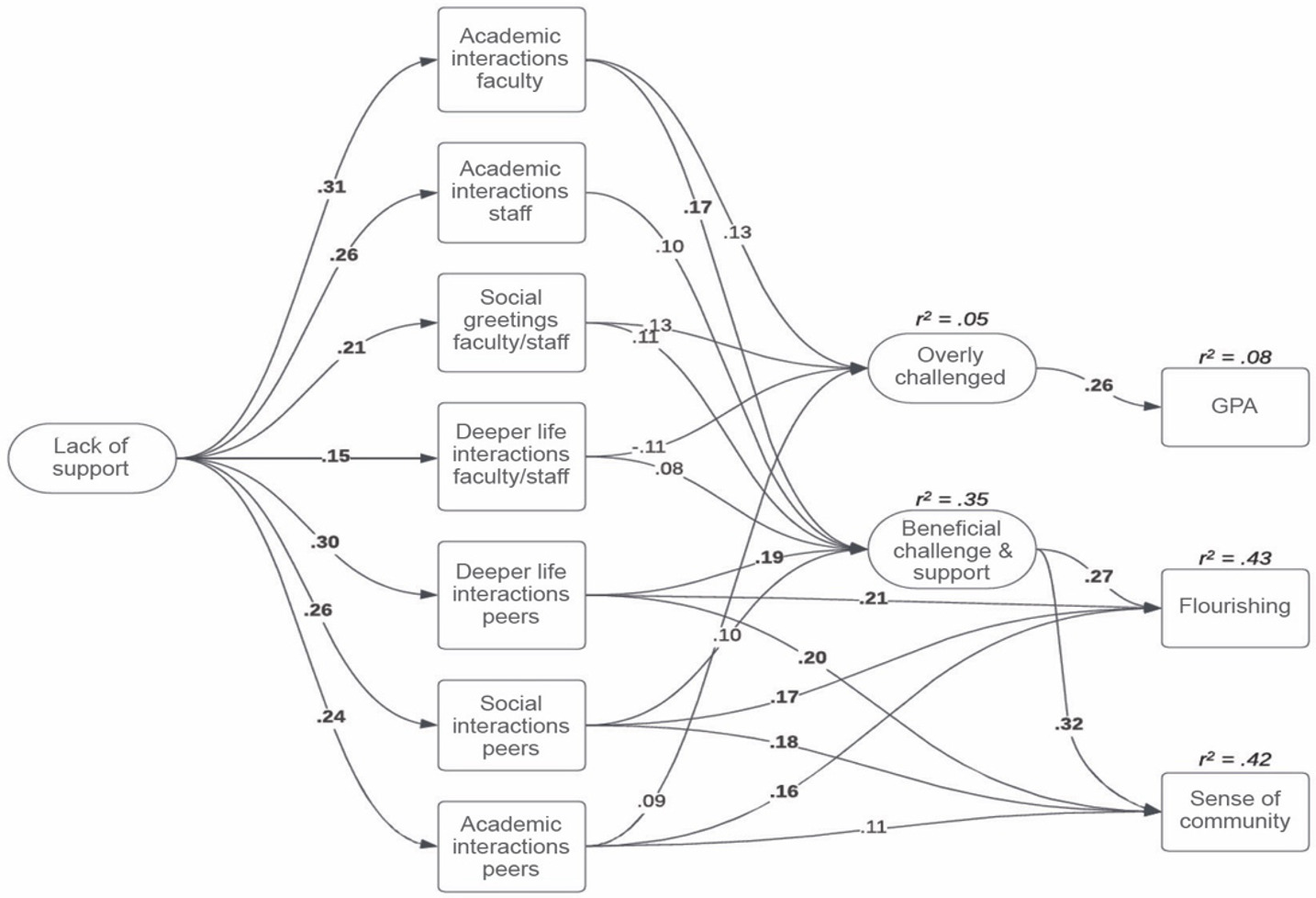
Certain pathways did not reach statistical significance, and Figure 2 only displays the model with the standardized regression coefficients (beta weights) for each statistically significant relationship. Based upon the suggestions of Mayhew and colleagues (2016), beta weights between .06 and .11 were considered a small but notable effect size; .12 to .19 were considered a medium effect; and greater than .20 was considered a large effect size. However, because so many pathways were statistically significant with meaningful effect sizes, only those with beta weights equal to or greater than an effect size of .15 are discussed further.
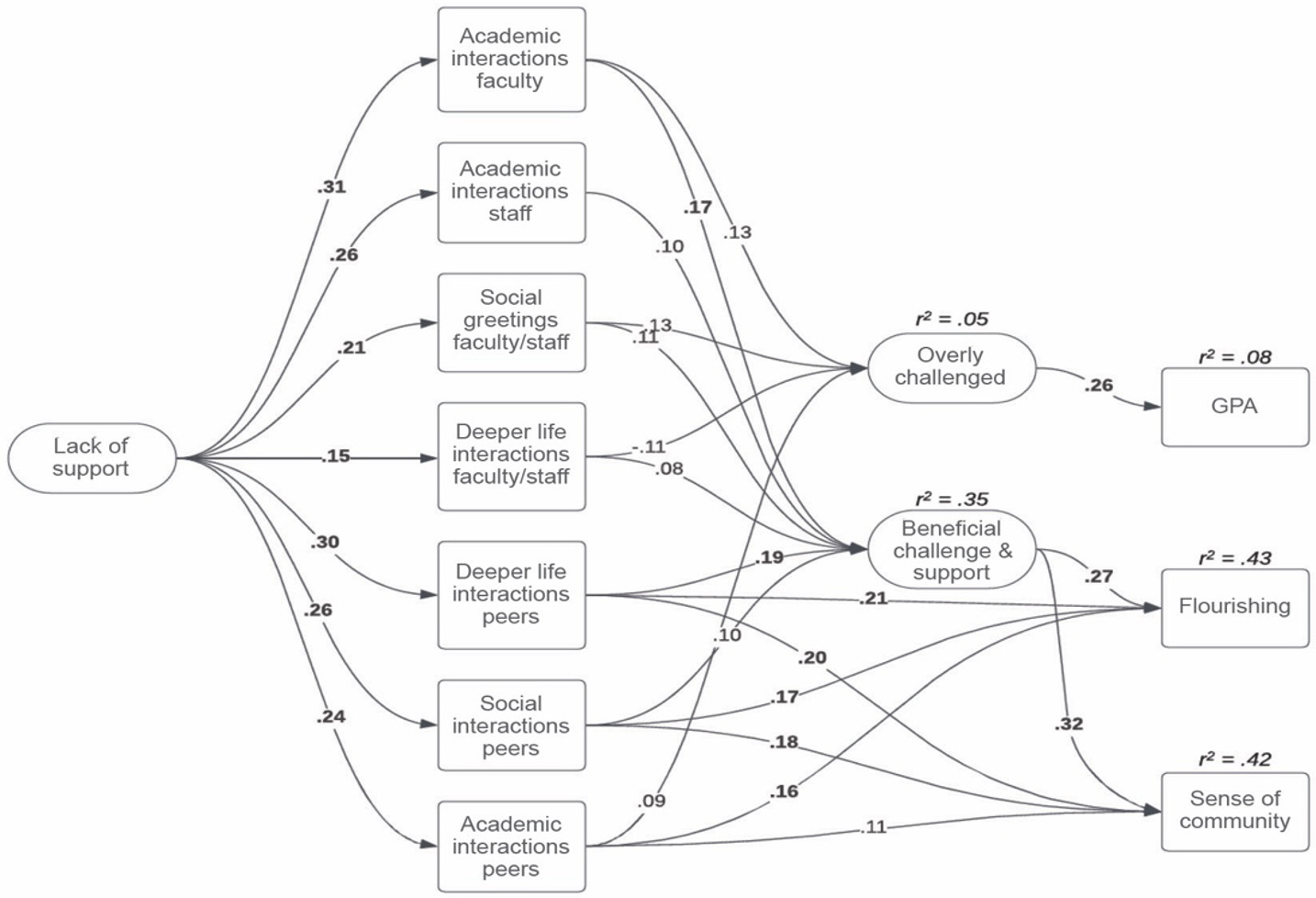
The SEM analysis revealed important pathways between students feeling a lack of support and student interactions. This illustrates that when one’s lack of support increases by 1 standard deviation (SD), the following student interactions are increased accordingly: academic interactions with faculty (β = 0.31, p < 0.001), academic interactions with staff (β = 0.26, p < 0.001), academic interactions with peers (β = 0.24, p < 0.001), social greetings with faculty and staff (β = 0.21, p < 0.001), social interactions with peers (β = 0.26, p < 0.001), deeper life interactions with faculty and staff (β = 0.15, p < 0.001), and deeper life interactions with peers (β = 0.30, p < 0.001). Additionally, academic interactions with faculty (β = 0.17, p < 0.001) and deeper life interactions with peers (β = 0.19, p < 0.001) positively influenced students’ beneficial balance of challenge and support. Deeper life interactions with faculty and staff both positively influenced beneficial challenge and support (β = 0.08, p = 0.041) and reduced feelings of being overly challenged (β = -0.11, p = 0.013). Deeper life interaction with faculty and staff was the only variable that reduced feelings of being overly challenged.
Beneficial challenge and support had a large positive influence on flourishing (β = 0.27, p < 0.001) and sense of belonging (β = 0.32, p < 0.001) for students living on campus. In addition, all three categories of peer interactions had a large effect on flourishing: academic interactions with peers (β = 0.16, p < 0.001), social interactions with peers (β = 0.17, p < 0.001), and deeper life interactions with peers (β = 0.21, p < 0.001). Sense of belonging was also strongly influenced by certain peer interactions, such as social interactions (β = 0.18, p < 0.001) and deeper life interactions (β = 0.20, p < 0.001). Regarding academic performance, feeling overly challenged had a large positive effect on GPA (β = 0.26, p < 0.001).
In addition to effect sizes in standard deviations, we used R2 to measure effect size in percentage terms, with .05 as a small but notable effect, .10 as medium, and .20 as large (Sriram, 2017). Academic interactions with faculty, academic interactions with staff, social greetings with faculty and staff, social interactions with peers, deeper life interactions with faculty and staff, and deeper life interactions with peers together explained 35% of students’ beneficial balance of challenge and support. Academic interactions with faculty, academic interactions with peers, social greetings with faculty and staff, and deeper life interactions with faculty and staff explained 5% of the overly challenged variable. Feeling overly challenged predicted 8% of GPA, while beneficial challenge and support and all three categories of peer interactions explained 43% of flourishing and 42% of sense of belonging.
DISCUSSION
This research aims to develop valid scales for assessing student perceptions of challenge and support and to test a model explaining how these factors, along with student interactions, influence the success trident (flourishing, sense of belonging, and academic performance) for students living on campus. This study also addresses a gap in the literature by drawing on the scholarly contributions of previous researchers (Sanford, 1966; Sriram, Weintraub, et al., 2020; Tinto, 1993) to explore the intricate relationship between students’ interactions and levels of challenge and support on campus on the one hand and their flourishing, sense of belonging, and academic performance on the other. For this reason, the findings of this study have important implications for residence life professionals and the broader higher education community.
Our results provide strong support for a model demonstrating the significant predictive power of challenge, support, and student interactions on the success trident for students residing on campus. Specifically, we found that a beneficial balance of challenge and support as well as peer interactions play a critical role in students’ sense of belonging and flourishing. These findings underscore the importance of creating and maintaining environments that promote adequate challenge and support along with meaningful student interactions to enhance well-being and academic success.
This study revealed that student interactions with peers, faculty, and staff increase when students perceive a lack of support. We interpret this as students actively seeking support by initiating connections; when they feel unsupported, they are inclined to utilize available resources by creating these interactions. Residence life professionals should ensure that support is readily accessible, recognizing that students will often seek it out through increased engagement with others. On-campus residential communities represent premier opportunities for fostering a stong web of relationships among students, faculty, and staff.
Central to our investigation is the validation of a scale measuring beneficial levels of challenge and support. This validation not only provides a robust framework for assessing student experiences but also sheds light on the pivotal role these factors play in shaping flourishing, sense of belonging, and academic performance. Armed with this knowledge, residence life professionals are empowered to initiate intentional interactions and cultivate environments that support these interactions to nurture student well-being and success.
Implications for Theory
Challenge, support, and student interactions. This study contributes to theory by developing valid challenge and support scales that measure students’ perceptions of lack of support, feeling overly challenged, and experiencing a beneficial balance of challenge and support. The beneficial balance of challenge and support variable specifically contributes to theory by building on Sanford’s (1966) work and providing statistical evidence of the factors that predict a beneficial balance of challenge and support for students living on campus. The latent variables that predicted 35% of students’ beneficial challenge and support were academic interactions with faculty and staff, social interactions with peers, social greetings with faculty and staff, and deeper life interactions with peers, faculty, and staff. Furthermore, academic interactions with faculty and deeper life interactions with peers each had a large effect on beneficial challenge and support, revealing that both social and academic interactions impacted students’ academic performance (Tinto, 1993) and that social, academic, and deeper life interactions have a positive impact on students’ sense of belonging (Sriram, Weintraub, et al., 2020). What is most important in these studies is the conclusion that lack of support can lead to interactions, and then interactions can lead to a beneficial balance of challenge and support.
Challenge, support, and the student success trident. Though a beneficial balance of challenge and support enables students to maximize their development (Sanford, 1966), we found that this variable also has a large influence on both flourishing and sense of belonging. A beneficial balance of challenge and support has long been a goal for residence life programs (Blimling, 2015), and this study provides a scale to measure this outcome.
One surprising discovery that emerged from this study suggests that when students experienced excessive challenge, their GPA increased. This finding challenges Sanford’s (1966) theory, which posited that students tend to give up when faced with overwhelming challenges due to a lack of support. Our results diverge from this theory, suggesting that experiencing a significant challenge outside one’s comfort zone may actually boost academic performance for some on-campus students. Academically challenged students tend to seek personal connection (Longerbeam, 2016), which aligns with our findings that students facing a lack of support strive to increase their interactions with faculty, staff, and peers across academic, social, and deeper life domains. Excessive challenge may drive students toward the resources institutions offer, such as professional staff, peer mentors, and faculty.
Student interactions and the student success trident. Academic, social, and deeper life interactions with peers were not originally hypothesized to directly influence flourishing and sense of belonging. However, we discovered that each of those interaction types did have a significant influence, which affirms the research conducted by Sriram, Weintraub, and colleagues (2020). In terms of flourishing, these results add another layer to previous research by highlighting another important outcome variable influenced by peer interactions.
Implications for Current Practice in Housing
The results of this study hold considerable implications for various stakeholders in higher education and especially for student-facing residence life professionals involved in program or policy development and implementation.
The importance of student interactions. Sanford’s (1966) theory has become foundational for residence life professionals trying to foster student development (Blimling, 2015), and sense of belonging has gained the attention of campus leaders because it has such a large impact on student success. The present study affirms that student interactions have a significant impact on sense of belonging (Schreiner et al., 2013; Sriram, Weintraub, et al., 2020).
Student interactions—specifically those with peers in the academic, social, and deeper life domains—were driving factors for students’ beneficial balance of challenge and support, explaining 35% of that balance. Furthermore, peer interactions in all three categories combined with a beneficial balance of challenge and support greatly influenced students’ flourishing (43%) and sense of belonging (42%). These results have significant implications because they reveal that fostering student interactions in on-campus residential communities has important benefits for the student experience.
Fostering student interactions has a positive impact on qualities such as engaged learning and social connectedness, and residence life professionals and student staff are well positioned to intentionally leverage these interactions and “weave them into mentoring, advising, and counseling conversations” (Erck & Sriram, 2022a, p. 23). They can also engage students frequently in both casual and formal discussions encompassing conduct violations, roommate conflicts, and other pertinent issues. Students’ sense of belonging, flourishing, and a balanced level of challenge and support can be significantly influenced by maximizing the potential of every interaction by incorporating a variety of engagement strategies.
Designing intentional residential experiences. In addition to fostering intentional interactions, residence life staff can strategically design events that can shape students’ social connectedness, positive outlook, engagement, and determination (Erck & Sriram, 2022b). Programming with the explicit intention of increasing student interactions and providing spaces for students to connect with their peers, faculty, and staff can significantly contribute to students’ overall success in college.
Supporting students through challenge. The ability of students to accept and face the challenges of college greatly impacts their overall success by fostering personal connections (Longerbeam, 2016), but the present study also reveals a specific unexpected effect: Students’ GPAs can improve when they face excessive challenges. This finding appears counterintuitive, since feeling overly challenged would seem to lead to poorer academic performance. However, participants lived on campus, where programs of support are readily available and easily accessible; thus, the feeling of being overwhelmed may have led them to seek out supportive relationships, which in turn improved academic performance. This finding implies that residence life professionals can help students embrace the challenges of college while offering support throughout their academic journey, thereby positively influencing their academic success. On-campus residential communities are ideal avenues of support because of the availability and accessibility of so many resources.
It is important to acknowledge that these results may be quite different for students who do not live on campus. Supportive campus environments and enriching educational experiences are positively related to learning and graduation (Longerbeam, 2016), and ultimately all three aspects of the student success trident (flourishing, sense of belonging, and academic performance) were influenced by either student interactions or challenge and support dynamics. Failure to acknowledge these benefits may overlook stark differences that could emerge when comparing on-campus to off-campus students. When students live on campus, the difference goes beyond facilities; they encounter peers, faculty, and staff through purposeful residence life programming that can have a large positive influence on success outcomes, including GPA.
Implications for Future Research
The present study aimed to identify factors that contribute to feelings of lack of support and being overly challenged among college students who live on campus. Despite uncovering the substantial influence that lack of support has on student interactions, further research is warranted to delve into the underlying factors contributing to these experiences. Moreover, exploring the predictors of GPA, such as flourishing, sense of belonging, and student interactions, holds theoretical promise for enhancing our understanding of academic success.
Another avenue for future research involves examining how the relationships among the variables investigated in this study translate to different institutional contexts. Conducting multi-institutional studies would provide valuable insights into the generalizability and robustness of the findings across diverse settings. Considering the significant impact of campus racial climate on Latinx students’ sense of belonging (Hurtado & Carter, 1997), for example, could reveal how these relationships vary among students of color. Investigating the nuances of these relationships in diverse racial and ethnic groups would contribute to a more comprehensive understanding of student experiences in higher education.
Limitations
Several limitations should be noted when interpreting the results of this study. Employing latent variables within the framework of classical test theory inherently imposes constraints, as latent variables cannot be directly measured. Although the concept of the true score of a latent variable represents its inability to be measured, the demonstrated validity and reliability of each scale in this study demonstrates that each is an accurate indirect measurement of the respective latent variables within a postpositivist epistemology (Sriram, 2017).
Another limitation is that focusing on a single institution—a large public research university—limited generalizability. The findings nevertheless offer valuable insights within this specific context, and utilizing one site allowed the researchers to obtain valuable GPA data for participants, but caution should be exercised when extrapolating the findings to broader populations. Future research endeavors should aim to replicate these findings across multiple institutions to enhance the generalizability and robustness of the conclusions. Additionally, the study’s reliance on self-reported data may introduce response biases or inaccuracies, despite the scales demonstrating validity and reliability.
CONCLUSION
By validating multiple scales to measure different levels of challenge and support, this study illuminated pathways toward enhancing student interactions, flourishing, sense of belonging, and GPA. These findings matter because they not only underscore the importance of student interactions but also provide residence life professionals with tangible strategies to promote student flourishing and sense of belonging. The implications of this study resonate across both practice and research domains. For practitioners, the findings offer actionable insights to cultivate interactions aimed at creating a beneficial balance of challenge and support, sense of belonging, and flourishing. For researchers, the findings highlight the need to further explore the intricate dynamics of the variables investigated in this study across diverse institutional contexts and demographic groups. In essence, this study enriches our understanding by presenting a model that explains how a lack of support influences students’ interactions when they live on campus and that student interactions can positively influence a beneficial balance of challenge and support, flourishing, and sense of belonging. In addition, this study shows the unique positive relationship that being overly challenged has upon GPA for on-campus residential students.