Historically Black Colleges and Universities (HBCUs) have played a vital yet undervalued role in U.S. postsecondary education for nearly two centuries (Cheyney University of Pennsylvania, 2026). Today, these institutions continue to be havens for Black students to grow and learn and to advance their careers. As of 2022, HBCUs accounted for 20% of Black college graduates despite making up only 3% of postsecondary institutions in the U.S. (United Negro College Fund [UNCF] & Active Minds, 2023).
Historically Black colleges and universities (HCBUs) are black academic institutions established prior to 1964 whose principal mission was, and still is, the education of black Americans. . . . They were founded and developed in an environment unlike that surrounding other colleges—that is, in a hostile environment marked by legal segregation and isolation from mainstream U.S. higher education. (Roebuck & Murty, 1993, p. 3)
Despite the many benefits of attending an HBCU, these institutions have not been immune to the mental health crisis plaguing campuses across the nation. After the onset of the COVID-19 pandemic, 49% of sampled HBCU students met clinical criteria for depression and 39% for anxiety (Wang & Goodman, 2021). Black students with prior symptoms of depression attending an HBCU were less likely than those in a Predominantly White Institution (PWI) to continue experiencing depression symptoms seven years after graduation (Thyden et al., 2023), suggesting that attending college in a supportive environment can mitigate the impact of racism for Black students through community building and culturally responsive support systems. Yet even before students arrive on campus, it is estimated that 61% of Black youth have endured at least one “adverse childhood experience” (Jamieson, 2018, para. 2).
Though the study of mental health and trauma within the context of HBCU students has begun to garner significant attention within academic literature, there are no studies exploring how campus housing impacts their mental health. This is a significant gap in knowledge given prior studies that have illustrated the general benefits of living on campus for students’ sense of community and belonging (Duran et al., 2020)—outcomes that have been positively associated with increased mental health well-being (Gopalan et al., 2022). To that end, this study sought to explore the following research questions: To what extent do first-year students at public Historically Black Colleges and Universities report experiencing positive residential relationships, trauma exposure, and positive mental health well-being? To what extent do positive residential relationships influence mental health well-being for first-year public HBCU students who have experienced trauma?
Mental Health Well-being at HBCUs
Historically Black Colleges and Universities have played an integral role in higher education for Black students, offering a unique environment shaped by cultural identity and a shared history (Cheyney University of Pennsylvania, 2026), and the mental health landscape of students remains an increasingly relevant and complex issue. While Black students at HBCUs report higher rates of thriving, purpose, and social, physical, and community well-being (United Negro College Fund [UNCF] & Active Minds, 2023), student mental health issues remain a significant concern for campus leaders. In fact, “Suicide is a leading cause of death among college-aged students in the United States” (McDaniel, 2021, p. 3).
The causes of these mental health challenges are multifaceted and systemic, intertwining many sociocultural, historical, and institutional factors. Systemic racism and discrimination continue to have negative impacts on the mental health outcomes of Black Americans (Pieterse et al., 2012), which only adds to the historical and generational trauma of colonization, slavery, Jim Crow, and contemporary injustices (Rogers & Bryant-Davis, 2022). While HBCUs foster a culturally rich environment, they can simultaneously serve as a place where students must constantly grapple with the negative impacts of racial trauma and societal inequities (Courington, 2021; Murty & Payne, 2021; Tingle, 2021; Walker, 2015), adding yet another layer to the mental health experiences of these students.
Financial constraints also emerge as a critical factor shaping mental health at HBCUs, which are faced with the problem of allocating resources, including those dedicated to mental health services (United Negro College Fund [UNCF] & Active Minds, 2023). The financial strain on these institutions could limit the development of comprehensive mental health programs, potentially hindering students’ access to essential support structures.
The stigma surrounding the mental health issues of Black college students, who continue to be affected by prior atrocities committed against Black individuals by a predominantly White healthcare community, adds another layer of complexity. Overcoming this stigma is essential for fostering an environment where Black students feel comfortable seeking assistance for their mental health needs (Rivera et al., 2021). Despite these historic truths, the reluctance to acknowledge or address mental health concerns creates an unnecessary barrier to effective intervention and support.
Academic pressures also contribute to the heightened stress levels observed among HBCU students. The pressure to excel academically, coupled with potential feelings of isolation, can exacerbate mental health challenges among students striving for success within the HBCU academic landscape (Mosby, 2009; Negga et al., 2007). A phenomenon referred to as imposter syndrome, which makes people doubt their own strengths and accomplishments, can add an additional form of stress, negatively impacting Black well-being in the college environment (Bernard et al., 2020).
Addressing these challenges requires comprehensive interventions and a nuanced understanding of the unique context of HBCUs. A recent report from the United Negro College Fund [UNCF] and Active Minds (2023) advocated for increased funding to bolster mental health resources such as culturally competent counseling services to address the specific needs of African American students on HBCU campuses. However, other scholars call for a more holistic approach where all aspects of the campus community are examined to create an extensive matrix of mental health support (Besse et al., 2022; Downs et al., 2016). Given recent imperatives that have expanded on-campus housing options at HBCUs (Lu, 2022; Weissman, 2022), it seems clear that residence life programs are uniquely equipped to harness these environments to promote community engagement (Fink, 2014), positive social relationships (Rubin et al., 2016), and mental health literacy (Reis et al., 2022), all of which have been associated with increased mental health resilience.
HBCU Students and Exposure to Trauma
Although the causes of the student mental health crisis are complex, one significant factor is exposure to trauma (Alonso, 2024; Watt et al., 2019). Defined as the response to an event or circumstance that “overwhelms the individual’s capacity to cope” (Brencio & Novak, 2019, p. 11), trauma is strongly associated with outcomes such as anxiety, depression, substance abuse disorder, and suicidal ideation (Center for Substance Abuse Treatment, 2014). Studies reveal that a majority of HBCU students, on average, reported experiencing at least one potentially traumatic event or set of circumstances during college (Ricks & Lynch, 2024; Walker, 2015); the spectrum of trauma encompasses racial discrimination, community violence, poverty, interpersonal violence, and abuse, as well as the historical trauma rooted in the legacy of racism and systemic inequities (Ricks & Lynch, 2024; Rogers & Bryant-Davis, 2022). Students exposed to traumatic events can be more susceptible to adverse mental and physical health issues, and trauma exposure during college can have profound repercussions on academic performance (Aruguete & Edman, 2019; Pereira et al., 2018; Ricks & Lynch, 2024), mental well-being (Alonso, 2024; Watt et al., 2019), and overall functioning.
Effectively addressing trauma exposure among HBCU students requires a comprehensive approach centered on fostering resilience and facilitating healing. Implementation of trauma-informed practices, encompassing trauma-sensitive counseling services and nurturing campus environments, is indispensable in catering to the unique needs of students who are facing trauma (Bryant-Davis & Ocampo, 2005; Ricks & Lynch, 2024; Shalka, 2024). Cultivating a sense of community and belonging within HBCU campuses can serve as a catalyst for healing, mental health, and overall well-being among students; fortunately, HBCU students with high levels of prior trauma exposure identified support systems and relationships as being key to their mental health well-being (Ricks & Lynch, 2024).
Positive Social Relationships, Mental Health, and Trauma
Residence life programs at HBCUs can play a critical role in mitigating poor mental health among students, primarily by fostering a positive and prosocial residential community. Positive social relationships play a pivotal role in the mental health and overall well-being of college students, who must face all the challenges of the transition to college life: academic pressures, new social environments, and increased independence. Fortunately, the quality of social relationships during this critical period can have a profound positive impact on the mental health outcomes of college students (Cai et al., 2017; Rubin et al., 2016; Silver Wolf (Adelv unegv Waya) et al., 2017), providing the kind of valuable social support that has been linked to reduced levels of stress and better mental health (Fink, 2014). The availability of emotional, informational, and instrumental support from friends, family, and peers also helps students cope with the challenges they may face, contributing to a more positive mental health status.
The impact of positive social relationships extends beyond stress reduction. College students who reported higher levels of social integration and positive relationships had higher levels of mental health well-being (Rose et al., 2014), which contributed to a sense of belonging that is associated with protective factors such as higher self-esteem, life satisfaction, and academic success (Gopalan & Brady, 2020; Strayhorn, 2018).
Positive social relationships contribute to the development of emotional intelligence (Trigueros et al., 2020) and interpersonal skills (Segrin & Taylor, 2007)—skills that not only enhance social interactions but also contribute to better mental health outcomes (Mohan, 2018). College students who are equipped with effective social skills are more resilient in the face of challenges and better able to navigate the complexities of college life. Yet despite the role of housing and residence life in promoting strong social relationships among students, there have been no studies about how living on campus affects the mental health well-being of Black students at HBCUs, particularly those who may benefit most, such as students who experience trauma.
Conceptual Framework
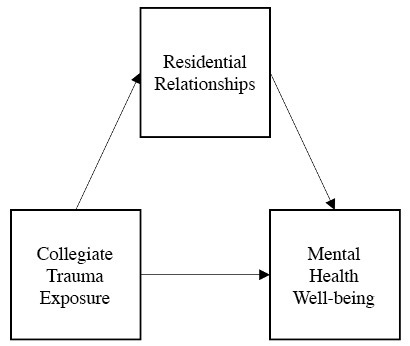
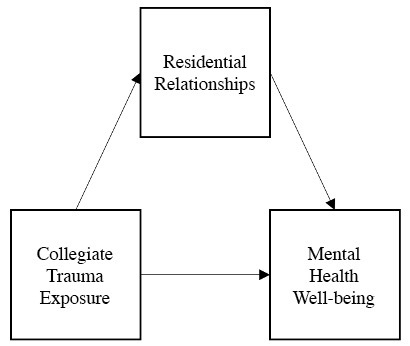
The likelihood of being exposed to traumatic events or circumstances is fairly high for college students (Lynch & Wojdak, 2023), particularly for those with historically marginalized identities based on race, sexual orientation, gender, first-generation status, or socioeconomic status (Schertz-Hany, 2023). However, strong positive relationships can significantly mitigate the impact of trauma (Galovski, 2022). To that end, we hypothesize that these associations will hold true within residential environments at HBCUs. Specifically, we posit that positive residential relationships within campus housing will have a significant mediating effect on trauma exposure in college (see Figure 1).
Methods
This study is guided by a critical epistemology that recognizes the racist history in which Historically Black Colleges and Universities emerged. As they have thrived despite a long history of underfunding and marginalization within the postsecondary education sector (Wade, 2021), so have their housing and residential life departments. With this in mind, we utilized Quantitative Critical Race Theory (QuantCrit) to ground our work. As Castillo and Gilborn (2023) advise, QuantCrit research must center five principles: “(1) the centrality of racism; (2) numbers are not neutral; (3) categories are not natural; (4) voice and insight (data cannot ‘speak’ for itself); and (5) a social justice/equity orientation” (para. 1).
Recruitment and Sample Description
Three public HBCUs in the southeastern U.S. volunteered to be sites for this study. Senior Student Affairs Officers (SSAOs) from each institution partnered with researchers to provide email addresses for qualifying students (full-time, first-year, and at least 18 years old). In return, the officers received a de-identified data report of results, as well as a benchmarking report of all participating institutions. The primary investigators also offered their time to debrief data reports with SSAOs. As an incentive, student participants received a $10 electronic Amazon gift card, funded by the Association of College & University Housing Officers-International (ACUHO-I) Foundation, for completing the survey. Across the three institutions, 556 students participated, resulting in a 4% margin of error at a 95% confidence level. (See Table 1.)
Data Collection and Analysis
Data were collected in April 2022 via an electronic survey instrument consisting of 97 items measuring a variety of constructs across topics related to academic success and behavioral health and wellness. Students were emailed a copy of the electronic survey, which took an average of 15 minutes to complete, and asked to reflect on their experiences at their institution.
Variables for the Study
The following were used as independent variables for this study:
Collegiate Trauma Exposure Scale (CTE). The CTE scale asked students to select any of the 14 trauma types listed while enrolled at their institution. See Table 2 for the list of trauma types from which students were able to select.
Residential relationships. Residential relationships were measured using 4 items developed to understand the extent to which students had positive relationships within their residential communities. See Table 2 for the list of items associated with this scale. Chronbach’s alpha revealed the scale to have acceptable internal consistency (α = .69).
The dependent variable was labeled mental health well-being. To measure this construct, we utilized the widely cited 14-item Warwick-Edinburgh Mental Wellbeing Scale. Items were measured on a 5-point Likert scale (1 = strongly disagree, 5 = strongly agree) and asked students to reflect on their experiences over the two weeks prior to their participation. See Table 2 for the list of items associated with this scale. Chronbach’s alpha revealed the scale to have strong internal consistency (α = .92).
Data Analysis
IBM SPSS Version 27 was used for data analysis. Descriptive statistics were used to understand how students describe their exposure to trauma, their mental health well-being, and their residential relationships through measures of centrality and dispersion. Pearson’s r was utilized to understand existing relationships between the variables described previously, and linear regression was utilized to measure direct and indirect effects for mediation analysis. Finally, Sobel’s test was employed to test the significance of any mediating effects.
Collective Positionality Statement
Understanding the positionality of researchers is pivotal in contextualizing and interpreting the research findings (Jafar, 2018). Three of our team members are faculty, actively engaged in academic pursuits, and well acquainted with the unique nuances and challenges of student life and learning at HBCUs. Additionally, two members have experience as HBCU housing professionals, offering keen insight into the lived experiences of students in these residential settings. This duality of roles has enriched our perspective, enabling us to approach the research with a blend of theoretical and practical understanding.
In terms of racial and gender identities, our team is diverse. We comprise two Black women, one Black man, and one White man. Such diversity not only brings varied lived experiences to the table but also fosters a multiplicity of viewpoints. Additionally, we all have had professional experiences within public HBCUs—shared experiences within the specific milieu of public HBCUs that allow for a common foundational understanding of the institutional structures, student dynamics, and cultural ethos. However, it’s crucial to note that a majority of our team also has a background in mental health or trauma, either through professional engagement or academic training. This expertise positions us to approach the study not just with a generic understanding of student life but also with a specialized lens attuned to the intricacies of mental well-being, trauma, and their interplay with positive relationships.
Collectively, our positionalities and our backgrounds in mental health and trauma have deeply informed our approach to this research. We believe that our diverse yet interconnected positionalities have strengthened our study, allowing us to engage with the data with both depth and breadth, sensitivity and reflexivity.
Results
Descriptive statistics revealed several important insights. First, sampled HBCU students reported some level of trauma exposure, reporting an average of 1–2 traumatic events or circumstances during their first year of college. Of the options presented, the most frequent types of potentially traumatic events or circumstances selected were severe mental health episodes (39%), the death of a loved one (21%), food insecurity (13%), disordered eating (10%), and suicidal ideation (10%). Students also reported generally neutral to positive relationships within their residential communities (M = 3.83), with reports of strong ties with residential peers (M = 4.48–4.56), but low involvement with formal community events (i.e., hall programming, M = 2.72). With regard to mental health well-being, student reports were generally neutral (M = 3.34) and revealed higher scores in their ability to make decisions (M = 3.64) and to feel loved (M = 3.70) and a sense of general optimism (M = 3.55). Students generally reported lower levels of feeling relaxed (M = 2.98), useful (M = 3.30), and sociable (M = 3.18).
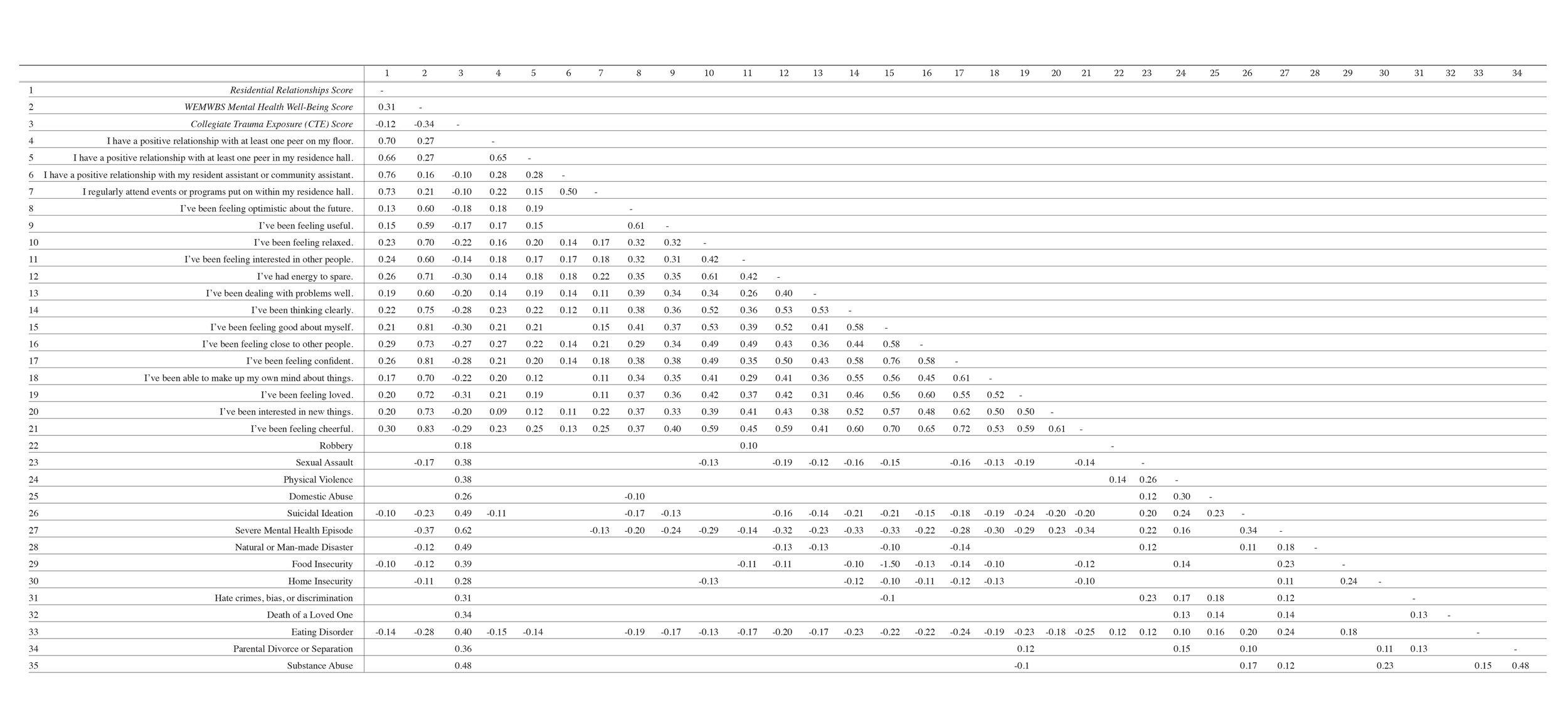
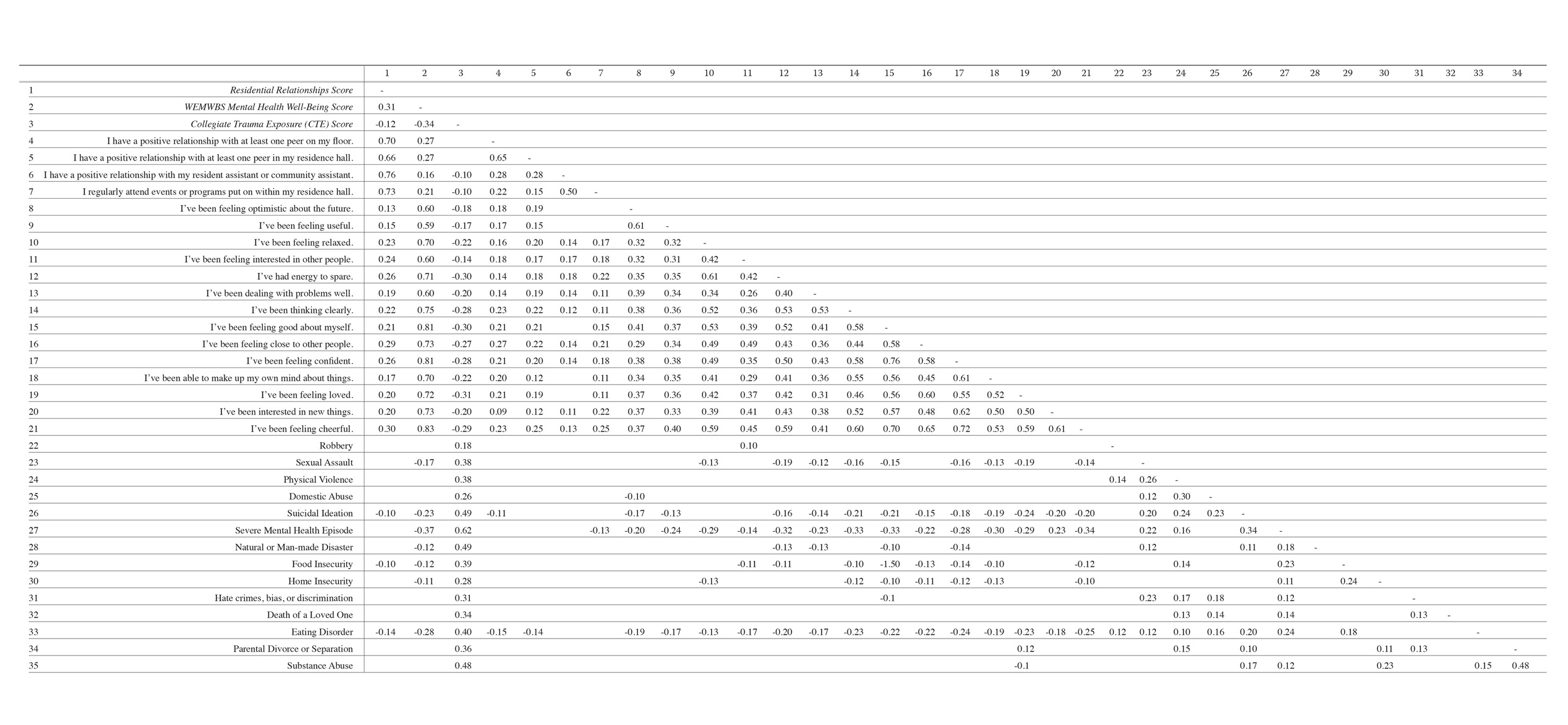
Pearson’s correlation was used to test relationships between trauma exposure, positive residential relationships, and mental health well-being. Results indicated a moderate inverse relationship between collegiate trauma exposure and mental health well-being (r = -.34), suggesting that as students experience more trauma exposure, their mental health well-being decreases. Reports of severe mental health episodes (r = -.37), suicidal ideation (r = -.23), and disordered eating (r = -.28) stood out, with small to moderate negative associations with mental health well-being; other trauma types had no association or negligible associations. Students’ overall collegiate trauma exposure (CTE) score was also found to have moderate negative associations with student reports of “having energy to spare” (r = -.30), “feeling good about myself” (r = -.30), and “feeling loved” (r = -.31). Small negative correlations were found between all other mental health well-being variables and the CTE score.
Furthermore, analyses indicated a moderate positive relationship between residential relationships and mental health well-being (r =.31), with the strongest associations among “feeling cheerful” (r = .30), “feeling close to other people” (r = .29), “having energy to spare” (r = .26) and “feeling confident” (r = .26). Positive correlations, though relatively small, were found between having at least one positive relationship with a floormate and “thinking clearly” (r = .23), “feeling close to other people” (r = .27), and “feeling cheerful” (r = .23). Small positive associations were also found between “feeling cheerful” and having a positive relationship with at least one building-mate (r = .25) and regularly attending hall programming (r = .25).
Though causation cannot be directly illustrated from these tests, results suggest that as trauma exposure increases for residential HBCU first-year students, overall mental health well-being decreases. Conversely, evidence suggests that the stronger the self-reported positive residential relationships of HBCU students, the higher their overall mental health well-being. (See Table 3.)
Mediation Analysis
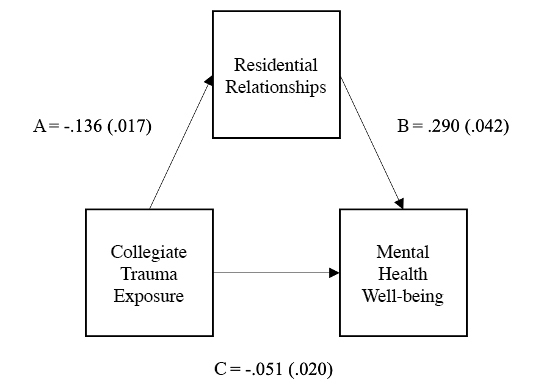
Results of mediation analysis revealed that the unstandardized regression coefficient between collegiate trauma exposure and residential relationships (Path A in Figure 2) was statistically significant, as was the unstandardized regression coefficient between residential relationships and mental health well-being (Path B). Additionally, there was a statistically significant direct effect between collegiate trauma exposure and mental health well-being (Path C). The indirect effect was (-.136)(.290) = -.039 and was found to be statistically significant using the Sobel test, t = -5.23, SE = .008, p < .00. Multiplying the partial correlation for Path A (-.136) and Path B (.290) revealed a moderate effect size for the partial mediation. See Figure 2 for a visual representation.
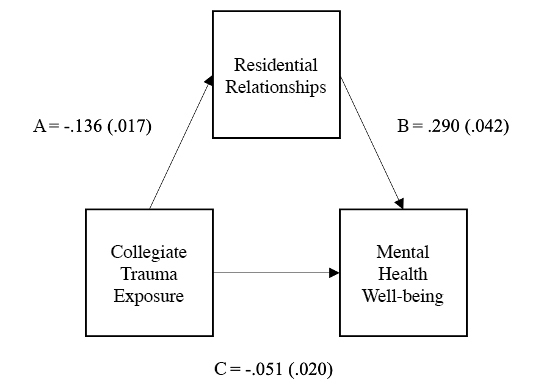
In more direct terms, exposure to trauma in college is predictive of student mental health, and the model illustrates that this occurs, in part, due to the impact of trauma exposure on a student’s ability to form residential relationships. This makes sense in that individuals with high levels of trauma exposure often develop coping strategies to protect themselves. Although these strategies may have served as protection mechanisms in the moment, they may no longer work to establish or maintain positive relationships outside of the traumatic experiences. For example, a student who has experienced sexual assault may become more isolated (shielding themselves from further harm), emotionally sensitive (on alert for future danger), and particular about their living environment (seeking to regain a sense of control). Yet from the point of view of a roommate, hallmate, or resident advisor, this student could be viewed as combative, emotionally unstable, or domineering, thus creating a barrier to forming a deeper relationship with the student experiencing trauma.
Discussion
The purpose of this study was to understand the role that residential relationships have in bolstering mental health well-being for first-year students at Historically Black College and Universities, particularly those who have been exposed to potentially traumatic events in their first year. Specifically, this study extends the discussion of the national college mental health crisis by illustrating the role of housing, an underutilized campus resource in bolstering mental health well-being, not just responding to mental health crises. This study also sheds light on the mental health experiences of first-year students at HBCUs, an often overlooked population in the housing literature. Much of the literature on student success within HBCUs centers on success being defined as academic performance, with scant literature on the impact of housing on student success within these institutions. Our study begins to fill this gap by demonstrating the role of campus housing enterprises as a key player in promoting student mental health, which has been directly connected to academic success (Eisenberg et al., 2009). As discussed below, the findings of our study serve to underscore the importance of relationship building and community.
Implications for Practice
Our study serves as a foundation for housing professionals at HBCUs, specifically highlighting the interplay between positive social interactions and psychological well-being. Housing organizations should expand their focus on enriching cocurricular programs with avenues for positive relational experiences that foster interpersonal skill building and promote hall-level sense of community and empathy. Such programs may include opportunities that hone communication, events that stimulate teamwork, and group exercises that allow students to share their mental health experiences. Beyond this, introducing well-being modules focusing on practices like mindfulness, training in emotional intelligence, and stress management techniques provides students with a toolbox to tackle many of the multifaceted challenges of collegiate life.
As HBCUs stand on the cusp of expanding their residential facilities, the architecture of these spaces should include consideration about how building layouts can promote or inhibit positive interactions. Even subtle architectural elements, such as a bench placed at a vantage point or an open kitchen design, can serve as magnets for spontaneous conversations and blooming friendships. The essence is to envision architecture not just as bricks and mortar but as a canvas that fosters community and connection.
Equally important in this tapestry of residential life are the individuals who serve as touchpoints for students: the resident assistants, resident directors, and administrative staff. These individuals often serve as linchpins who lay the groundwork for the residential experience, and through specialized training programs they can be equipped with skills ranging from mental health first aid to building relationships and resolving conflicts.
Finally, living-learning communities and common interest blocks can be utilized to create communities that specifically focus on mental health well-being. Students living in such dedicated communities may be trained to become peer mental health support volunteers (Johnson & Riley, 2021) through such initiatives as the Mental Health First Aid Program (Dzemaili et al., 2023). They can also provide passive and active educational opportunities for peers to develop self-help skills around building positive relationships on campus, as well as managing their own well-being.
Implications for Future Scholarship
The findings of this study serve as a solid foundation for future inquiry. One primary avenue for exploration is the dynamics of how residential students, especially those who have been exposed to significant trauma, manage to establish and nurture prosocial relationships within their residence hall ecosystems. The nuances of these relationships, their origins, and potential challenges remain a fertile ground for study. Though our current understanding provides a baseline, the intricacies of forming relationships, especially in the context of trauma, need a more nuanced exploration.
The environmental and contextual underpinnings that facilitate positive relationships in residence halls also warrant scholarly attention. Are there specific spaces, events, or activities within residential communities that act as catalysts for fostering these relationships? Understanding the spatial and programmatic aspects that promote prosocial behavior can offer actionable insights for institutions to craft more conducive environments.
The role of resident assistants in shaping, guiding, and potentially mediating these relationships remains uncertain. As key personnel in the residential community, they have an influential hand in orchestrating such community dynamics. Future research can probe the strategies, interventions, and challenges faced by resident assistants in fostering prosocial climates, given their pivotal position in residence halls.
A particularly compelling dimension for future exploration is the intersection of prosocial relationships and social identities. How do aspects of social identity—such as sexual orientation, gender, race, and other sociocultural markers—mediate the formation and experience of positive prosocial relationships in residence halls? Does the nature of these relationships differ, strengthen, or face challenges based on these identities? Understanding these intersections can provide a more comprehensive picture of the student experience, especially in the diverse settings of HBCUs.
Our findings offer a lens for understanding the experience of incoming or newer students. But do these insights and dynamics remain consistent as students progress through their academic journey? Do sophomores, juniors, and seniors experience positive relationships differently, and, if so, how? Delineating the experiences of continuing students can enrich our understanding of the evolving nature of residence hall relationships across different stages of the collegiate journey.
Limitations
This study is not without limitations and should be interpreted in light of its constraints. First, the cross sectional nature of the study design reveals only a snapshot in time and relies on participant memories of their experiences over the course of an academic year. Additionally, one key variable—collegiate trauma exposure—explored only if exposure to specific potentially traumatic experiences occurred but did not provide information about the duration or frequency of exposure, information that could give further insight into how this PWI may impact mental health well-being. Finally, this study purposefully centered first-year students, as research suggests the importance of first-year experiences in retention, though the results may look different in upper-division student populations.
Conclusion
While PWIs continue to fail Black students, HBCUs provide an invaluable mechanism for academic success, positive mental health, and social mobility. As enrollment in these institutions continues to increase, they will inevitably need to provide more housing. Although housing and residence life leaders may be tempted to rest on traditional residential life models and programming as they focus on meeting occupancy demands, they must not overlook the significant opportunity to leverage residential communities to create prosocial environments that foster mental health well-being, ultimately supporting the academic success of HBCU students. These professionals must not rely on counseling centers and wellness professionals as the sole architects to construct communities of mental health well-being. Instead, they must act in mutuality to meet the growing mental health demands of 21st century college students.